
lipo-, lip-, -lipid, -lipoid, -lipoma, -lipomatous +
(Greek: fat, fatty)
2. A popular operation in plastic surgery which removes fat from certain places on the human body (typically abdomen, thighs, buttocks) by liquefying it and removing it through a hollow needle. In some cases, more extreme measures; such as, abdominoplasty, may be needed.
Liposuction is primarily a form of body contouring and not a weight loss method.
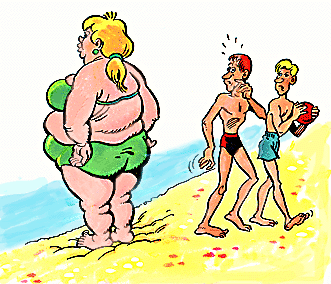
have seen her before she had liposuction.
Liposuction or cosmetic surgery to remove excess fatty tissue
Liposuction is a procedure that can help redesign the body by removing unwanted fat from specific areas, including the abdomen, hips, buttocks, thighs, knees, upper arms, chin, cheeks and neck. During the past decade, liposuction, which is also known as lipoplasty or "suction lipectomy", has benefited from several new refinements.
Now, a number of new techniques, including ultrasound-assisted lipoplasty (UAL), the tumescent technique, and the super-wet technique, are helping many plastic surgeons to provide selected patients with more precise results and faster recovery times.
Although no type of liposuction is a substitute for dieting and exercise, liposuction can remove stubborn areas of fat that don't respond to traditional weight-loss methods.
2. Removal of fat by high vacuum pressure; used in body contouring.
2. A vaccine having a vegetable oil as a solvent.
2. An agent that has such effects.
"Tumescent liposuctions are the most common cosmetic operations in the United States with over hundreds of thousands of such surgical operations done every year."
"The process of tumescent liposuction involves the breaking up and "sucking" out of fat from the body. This is done through a cannula (a hollow instrument) inserted subdermally (under the skin). A strong vacuum is then applied to the cannula."
The disadvantages of UAL include the need for longer incisions in the skin, potential for skin or internal burns, greater cost, and longer time.
