
2. A person who destroys sacred religious images.
3. A breaker or destroyer of images; especially, those set up for religious veneration.
4. A person who attacks cherished beliefs, traditional institutions, etc., as being based on error or superstition.
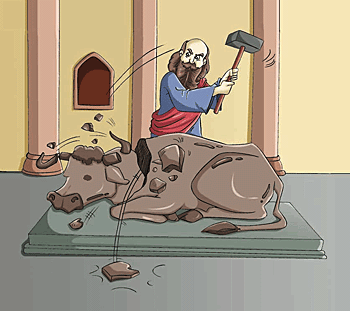
The original iconoclasts destroyed countless works of art; such as, religious images which were the subject of controversy among Christians of the Byzantine Empire, especially in the eighth and ninth centuries, when iconoclasm was at its height.
Those who opposed images did not simply destroy them, although many were demolished; they also attempted to have the images barred from display and veneration.
During the Protestant Reformation, images in churches were again felt to be idolatrous and were banned and destroyed. In the nineteenth century, the term "iconoclast" took on the secular sense that it has today; someone who breaks traditions, doctrines, convictions, practices, etc.
2. Etymology: "an image-breaker" which comes from Greek eikon, "image" + klastes, "breaker".
Iconoclasm, "image-breaking", was originally a policy of the Byzantine emperor Leo the Isaurian, who in A.D. 726, would not allow religious statues, icons, and other pictures, as well as candles, crosses, and holy medals to exist; on the theory that these "images" were the main hindrance to the conversion of Jews and Muslims.