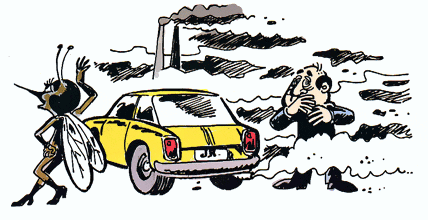
Malaria, A Short History
(it was originally thought that this disease was caused by foul air or "bad air")
We have inherited the word malaria from the Latin words malus aria, from Italian mal’aria through the contracted Italian mala aria which means “bad or evil air” because it was originally thought that this disease was caused by foul air, and particularly by vapors given off by swamps. It was also called “swamp fever”, and it is one of the most ancient infections known to humans.
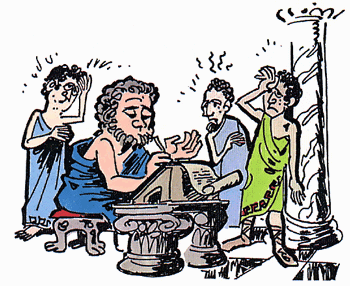
In the 5th century B.C., Hippocrates classified the fever types as quotidian (daily), tertian (alternate days) and quartan (fever three days apart). He also noticed that those who drank the stagnant marsh water had large stiff spleens, a characteristic of the disease, and fatal dropsy was common among them.

Roman soldiers camped away from the swamps to avoid the disease. There has always been some recognition of the association between swampy, marshy areas and the disease, although the exact roles of the mosquito and the parasite were not known until the beginning of the 20th century.
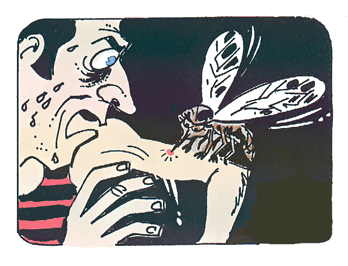
Later, mankind learned that mosquitoes could carry parasites from an infected man to a healthy one, with the …

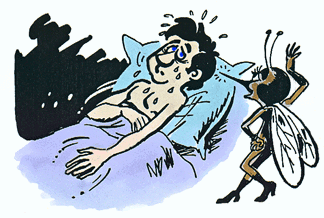
… result: the other man could also get malaria!
- Africa: Ninety-seven million cases of malaria a year. The tropical region’s leading killer of children claims five percent under five.
- Latin America: One million cases a year. The settlement of people in mosquito-infested rain forests in Brazil has exposed millions to the disease.
- Asia: Nine million cases a year. New, hard-to-treat strains are rapidly gaining ground.
- Scientists led by Padma Vesudevan of the Indian Institute of Technology in New Delhi have determined that peppermint oil can also repel mosquitoes and kill the larvae.
- They floated films of the oil, extracted from the peppermint plant Mentha piperita, on top of larvae-filled water; a day later nearly all the larvae were killed.
- The protection rate, based on the experience of volunteers who spent several nights outside, averaged 85 percent.
- The oil was especially effective against Anopheles culicifacies, the principal carrier of malaria in India [and many other places].
- There are some who believe that another kind of mala aria, or “malaria,” is today’s pollution.
Malaria is the world's most important infectious disease, affecting more than a hundred million people each year.
According to the World Health Organization, the following statistics reveal the spread of malaria in the world.
Malaria carrying mosquitoes have given us a plague of global dimensions. Developed countries are relatively free of malaria, but it remains well entrenched across the tropical world. The greatest burden falls on Africa; according to an article in the November 30, 1992, issue of Newsweek magazine, titled, “A Killer Returns”, pages 34-39.
What can be done to repel mosquitoes?