
eido-, eid-; ido-, id- +
(Greek: image, figure, form, shape; literally, "that which is seen")
2. In psychiatry, pertaining to or characterized by clear visualization (even by a voluntary act) of objects previously seen.
Eidetic images (also known as primary memory images) are clearer and richer in detail than the usual memory images and are also more intense and of better quality. Except that the subject recognizes the eidetic image as a memory experience, the phenomenon is analogous to a hallucination. Visual eidetic imagery is more common than auditory.
Eidetic people can readily reproduce in their minds, with great accuracy and detail, what they have seen recently or from some past event. Eidetic imagery is considered by some to be one of the most important elements for the mastery of chess.
2. In art, a small winged figure, human or combining human with animal elements, often found in Greek vase paintings: The very old urns and pitchers in the local museum were decorated with eidola showing the artistry of the ancient masters.
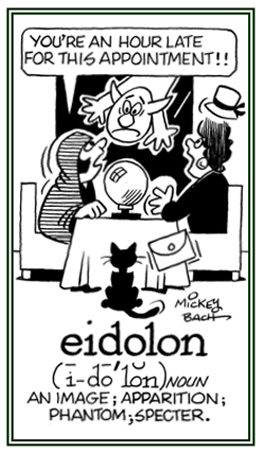
Go to this Word A Day Revisited Index
so you can see more of Mickey Bach's cartoons.
2. Idea; used by Plato.
3. The formal content of a culture, encompassing its system of ideas; criteria for interpreting experience, etc.
Inter-related cross references, directly or indirectly, involving word units dealing with "form, shape, appearance": figur-; form-; icono-; ideo-; imag-; morpho-; -oid; typo-.
