
dys-
(Greek: bad, harsh, wrong; ill; hard to do, difficult at; slow of; disordered; impaired, defective)
dysmorphic (adjective)
dysmorphism
1. Abnormality of shape or form.
2. A branch of clinical genetics concerned with the diagnosis and interpretation of patterns of the three types of structural defects: malformation, disruption, and deformation.
2. A branch of clinical genetics concerned with the diagnosis and interpretation of patterns of the three types of structural defects: malformation, disruption, and deformation.
dysmorphology
1. A branch of science dealing with the study of congenitally deformed fetuses; also teratology.
2. A branch of clinical genetics concerned with the diagnosis and interpretation of patterns of the three types of structural defects: malformation, disruption, and deformation.
2. A branch of clinical genetics concerned with the diagnosis and interpretation of patterns of the three types of structural defects: malformation, disruption, and deformation.
dysmorphomania
1. Preoccupation with the possibility of developing a physical deformity or a delusional conviction that such a deformity has already developed.
2. An abnormal dread of deformity, particularly in others.
2. An abnormal dread of deformity, particularly in others.
An irrational and obsessive dread of being deformed, or the illusion that one is deformed: Jackie had a very good figure and wanted to become a model, but, since she had dysmorphophobia, she was totally anxious and terrified that the little flaw on her hand would end her future career before it even started!
dysmorphophobic (adjective) (not comparable)
Concerning people who have anxieties about their faces, their breasts, or hips, etc., as well as of body or limbs being wrinkled, misshaped, too large, or too small, or of having unpleasant odors coming from body sweat or from one's breath, etc.: Dysmorphophobic individuals tend to believe that others will comment adversely about their appearance, and so such victims try to avoid the company of possible critics, either real or imaginary.
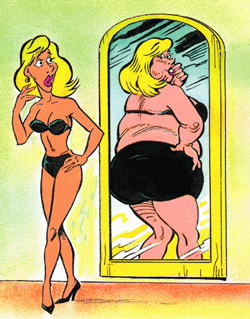
Some dysmorphophic persons may be unable to look others in the eyes and try to hide that part of their physical structure of which they are most self-conscious by growing their hair or wearing a hat to conceal imagined baldness or oddly shaped ears, by wearing dark glasses to hide the shapes of their eyes, or avoiding swimming so others will not see their figures.
There are also other dysmorphophic individuals who will not even look in mirrors because their own reflections upset them considerably, and they want to wash zealously to make sure that they are very clean and smell acceptable to others, although they are already very clean.
dysmorphopsia
Defective vision, with distortion of the shape of objects perceived.
dysmorphosis
Malformation or badly-shaped body parts or structures.
dysmyelination
Improper laying down or breakdown of a myelin sheath of a nerve fiber, caused by abnormal myelin metabolism.
dysniphos
Snowy, wintry.
dysnomia
Anomic aphasia (any disturbance in the comprehension or expression of language due to brain lesion).
dysnomy
A condition in which a patient forgets words or has difficulty finding words for written or oral expressions.
dysodont
Having impaired (bad) teeth.
dysodontiasis
1. Painful, difficult, or delayed eruption of teeth.
2. Painful or difficult dentition.
3. Difficulty or irregularity in the eruption of the teeth.
2. Painful or difficult dentition.
3. Difficulty or irregularity in the eruption of the teeth.
dysonogamia
Marriage between persons of markedly different ages.

