
-crat, -cracy, -cratic, -cratism, -cratically, -cracies
(Greek: a suffix; to govern, to rule; government, strength, power, might, authority)
Good laws derive from evil habits.
Two characteristics of government are that it cannot do anything quickly, and that it never knows when to quit.
There are those who say that adhocracies consist of managements that respond to urgent problems instead of delaying them or trying to avoid them.
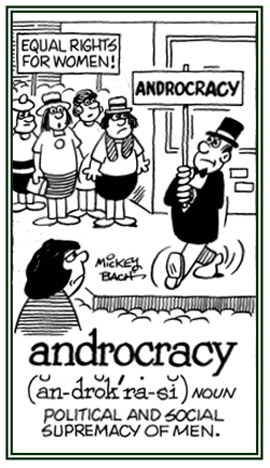
Go to this Word A Day Revisited Index
so you can see more of Mickey Bach's cartoons.
2. The government of a state by its “best” citizens: An aristocracy is that form of government in which the chief power lies in the hands of those who are most distinguished by birth or fortune or a political supremacy of a privileged order.
3. The class to which such a ruling body belongs, a patrician order: An aristocracy is the collective body of those, as the nobles, who form a privileged class with regard to the government of their country.
Aristocracy is popularly extended to include all of those who, by birth or fortune, occupy a position distinctly above the rest of the people and it is also used figuratively regarding those who are superior in other respects.
There are bad manners everywhere, but an aristocracy is bad manners organized.
If someone with arithmocracy wants to do away with criticism of the government with the hope of assuring national harmony, it would not get by with passing a law forbidding the media or private citizens from openly challenging any political decisions!
