
lyco-, lyc-, lycos- +
(Greek: wolf, wolves)
2. Etymology: the term comes from ancient Greek lykánthropos; lýkos, "wolf" + ánthropos, "mankind, human".
Other applicable terms include: insania lupina; melancholia canina; melancholia zooanthropic.
There were those who thought that there could be a magical lycanthropic transformation of someone into a wolf.
Lycanthropy was also the kind of witchcraft which made a person assume that he or she had the form and the nature of a wolf.
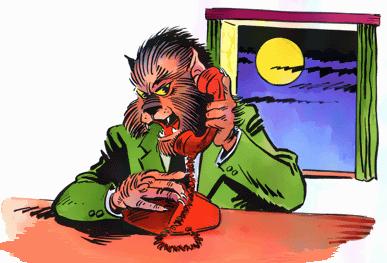
A lycanthrope is trying to get counseling during his monthly full-moon phase, but the service is busy.
Lycanthropy, the changing of men into wolves has been found over the centuries in literature and folklore through out the world
The term, werewolf, comes from the Latin vir for "man", literally, "man-wolf"; in Russia, the oborol; in Portugal, the lobishomen; in France, the loup-garou; and in Scandinavia, the vagr.
In medieval days, suspected werewolves were sometimes flayed alive in the search for the dreaded wolf skin hidden beneath their human one. While other man-into-beast stories certainly exist, like the frenzied bear-shirters, or "berserkers", of Scandinavian origin, there are far more accounts of people being changed into wolves.
Lycanthropy is mentioned by Herodotus and Pliny, and there is even a section of the 11th-century treatise Decreta dealing with werewolves who seek absolution. King James VI of Scotland gave an unusually sensitive account of the warwoolfe in his Demonologie of 1597, calling it "a natural superabundance of melancholie."
2. Etymology: Greek lykos, "wolf" plus perdesthai, "to break wind" plus osis, "condition".
2. An excessive appetite like that of a wolf.
Related wolf-word unit: lup-.