
The dietician said Keith should eat an apple every day and at least one banana.
The Flora and Fauna story
by Barbara Krahn-ChiussiJohn Robertson:
I received your book on 6/26/00. Congratulations on a great book. You no doubt spent a great amount of time in research. I find the book fascinating.
It’s been over 45 years since I studied Latin and Greek in college and unless one keeps it up, one tends to forget. You have rekindled my interest. Now that I’m retired, I’ll have more time. I have always been interested in the origin of words especially from Latin and Greek.
Because the schools do not teach Latin and Greek as they once did, your book would be invaluable in helping students with the English language; thereby enriching their thought process. I am so happy that we still have people in this world who regard knowledge of Latin and Greek essential to scholarly development.
To quote Seneca, Jr. from your book: “Non scholae, sed vitae discimus.” Thank you for your “illusions” and also many thanks to your wife.
Jeffrey
Note from your editor: The “illusions” referred to the dedication in Words for a Modern Age, A Cross Reference of Latin and Greek Combining Elements in which I wrote: “Dedicated to my wife, who has been my sine qua non. She has kept me in good health with her loving concern for my well being and has rarely interfered with my efforts to strive for my ‘illusions.’ ”
The Latin quotation by Seneca, Jr. means: “We don’t learn just for school, but we learn for life.”.
Speaking of books. The following came from "The Spelling Newsletter" published by Ray Laurita, Leonardo Press, PO Box 1326, Camden, ME 04843.
After reading the following exchange which appeared in the Metropolitan Diary, I have a feeling that our readers will be equally dismayed:
Carol Ruth Langer stopped at the information desk of a Barnes & Noble in Midtown to inquire about a copy of the Book of Job.
"How would you be spelling 'Job'?" the clerk asked.
"J -- O -- B", Ms. Langer said.
"Job books are in the career section."
Ms. Langer tried again. "Not job, Job, a book in the Bible".
"Who is the author" the clerk asked.
At that point, Ms. Langer knew it was time to leave.
2. Etymology: This terminology is considered to be a lawyer's redundancy since abet means the same thing as aid, which gives credence to the old rumor that lawyers used to be paid by the word as illustrated by the following statements as shown below.
To help, assist, or to facilitate the commission of a crime, to promote the accomplishment thereof, to help in advancing or bringing it about, or to encourage, counsel, or to incite as to its commission.
Aid and abet includes all the assistance rendered by words, acts, encouragement, support, or presence, actual or constructive, to render assistance if necessary.
Legally, aiding and abetting describes any and all assistance rendered by words, acts, encouragement, support, or presence, actual or constructive, and to render assistance, if necessary; and are obviously derived from a combination of aid and abet:
- Aid means "to support, to help, to assist, or to strengthen".
- Act in cooperation with; to supplement the efforts of another person or other people.
- Distinguished from abet, aid within the aider and abettor statue means "to help, to assist", or "to strengthen"; while abet means "to counsel, to encourage, to incite, or to assist" in the commission of a criminal act.
The “advanced words” in the following contain valuable information if for no other reason than that the concepts of tribology are so important in all of our lives. You may find some aspects difficult to comprehend, but just knowing what the Greek element tribo means, as well as some of the English words that are derived from it, will give you knowledge that is lacking even among the very educated.
This issue of Focusing on Words will present a relatively new, and not widely known, element from Greek that is used in modern engineering and physics: tribology. This Greek tribo- element means, “friction”, “rub”, “grind”, or “wear away”.
Most of the information for this subject came from an article, “Better Ways to Grease Industry’s Wheels,” from the September 28, 1998, issue of Fortune magazine written by Ivan Amato.
- Lubrication is central to machine performance, but it’s only part of the story. More and more, the bigger picture of machine health has been going by the label “tribology” [trigh BAH loh gee] which is based on the Greek word for “rubbing.”, “grinding”, or “wearing away”, etc.
- Tribology combines issues of lubrication, friction, and wear into a complex framework for designing, maintaining, and trouble-shooting the whole machine world.
- Tribology is already providing data that could be used to produce transmission fluids that give automobile drivers better fuel economy and a smoother ride.
- The most visionary tribology advocates and practitioners tend to view their field as the cure for much of what ails industry and even entire economies.
- Tribology has evolved into a bona fide field of research and technology since 1966, when a group of industrialists in England coined the term with assistance from an editor of the Oxford English Dictionary.
- The O. E. D. defines tribology as, “The branch of science and technology concerned with interacting surfaces in relative motion and with associated matters (as friction, wear, lubrication, and the design of bearings).” In 1968, H.P. Jost, in the February 8, 1968, issue of the New Scientist states, “After consultation with the English Dictionary Department of the Oxford University Press, we chose the term ‘tribology’.”
- Many tribologists devote themselves to uncovering the fundamental chemical and physical dramas that underlie good and bad lubrication, friction, and wear. They are relying on new tools like friction-force microscopes, that can examine surfaces down to the molecular level (nanotribology?).
- Transmissions are just one place where tribology makes a difference in the automotive industry. Other items on the agenda include controlling brake noise and wear, reducing internal friction in engines, and increasing the productivity, part quality, and energy efficiency of production machinery.
- The “tribology tribe” points proudly to its crucial role in the thirty-billion dollar-a-year data-storage industry. When it comes to surfaces in motion, this is an especially harrowing arena. Yet it’s through tribological know-how that makers of hard-disk drives have been able to squeeze more and more data into less and less space.
- The head that reads and writes information to and from a hard disk flies about 50 to 100 nanometers above the disk surface. That’s about one-thousandth the width of a human hair. Meanwhile, the disk typically spins beneath the head at about ten to twenty meters per second.
- Woody Monroy, head of corporate communications for Seagate Technology, which makes disk drives, says that in terms of speed and clearance, it’s the equivalent of an F-16 jet fighter plane flying one-sixty second of an inch [less than one millimeter] above the ground, counting blades of grass as it goes, at Mach 813 (or 813 times the speed of sound).
- There are many reasons computers go down, but one of the most dreaded is when the head assembly literally crashes into the spinning disk’s surface, tearing up and destroying precious data.
- It’s a tribological triumph that, despite all the hazards, vulnerabilities, and abuse by users, most storage systems operate fine most of the time because of proper coatings. The first protective layer is at most twenty nanometers thick. One leading-edge tribo-tactic is to fiddle with the molecular structure of the thin lubrication layer on top of the disk (nanotribology?).
- Tribologists have plenty of challenges to keep them busy, but it’s all part of making disk drives and economies run smoothly.
Lists of anatomy and anatomical topics.
Attorneys are protected from disclosing information about the clients they represent because of this privilege.

It appears that there are two honey bees getting nectar from a special flower.
With Fido, Spot, or Bowser;
But now they choose to stay indoors
With keyboard, mouse, and browser.
Dan Quayle quotes:
- “A low voter turnout is an indication of fewer people going to the polls.”
- “I believe we are on an irreversible trend toward more freedom and democracy, but that could change.”
- “If we do not succeed, then we run the risk of failure.”
- “I love California; I practically grew up in Phoenix.”
- “I stand by all the misstatements that I’ve made.”
- “It isn’t pollution that’s harming the environment. It’s the impurities in our air and water that are doing it.”
- “One word sums up probably the responsibility of any vice-president, and that one word is “to be prepared.”
- “People that are really very weird can get into sensitive positions and have a tremendous impact on history.”
- “The future will be better tomorrow.”
- “The Holocaust was an obscene period in our nation’s history. I mean in this century’s history. But we all lived in this century. I didn’t live in this century.”
- “The loss of life will be irreplaceable.”
- “We are ready for any unforeseen event that may or may not occur.”
- “We have a firm commitment to NATO, we are a part of NATO. We have a firm commitment to Europe. We are a part of Europe.”
- “We’re going to have the best-educated American people in the world.”
- “What a waste it is to lose one’s mind. Or not to have a mind is being very wasteful. How true that is.”
- “When I have been asked during these last weeks who caused the riots and the killing in L.A., my answer has been direct and simple: Who is to blame for the riots? The rioters are to blame."
"Who is to blame for the killings? The killers are to blame.”
- “Verbosity leads to unclear, inarticulate things.”
Groucho Marx quotes:
- “A child of five would understand this. Send someone to fetch a child of five.”
- “Either this man is dead or my watch has stopped.”
- “I find television very educating. Every time somebody turns on the set, I go into the other room and read a book.”
- “I refuse to join any club that would have me as a member.”
- “I’ve had a perfectly wonderful evening. But this wasn’t it.”
- “Those are my principles, and if you don’t like them . . . well, I have others.”
- “When I picked up your book I was so convulsed with laughter that I had to set it down, but one day I intend to read it.”
- “Outside of a dog, a book is man’s best friend. Inside of a dog it’s too dark to read.”
- “Some people claim that marriage interferes with romance. There’s no doubt about it. Anytime you have a romance, your wife is bound to interfere.”
Lists of words about economics, including an extensive range of financial and business areas.
- They work with power generation and transmission; machinery controls; lighting and wiring for buildings, automobiles, and aircraft; computers; radar; communications equipment; missile guidance systems; and consumer goods; such as, television sets and appliances.
- They may specialize in communications, computers, or power distribution equipment, or in a subdivision; such as, aviation electronic systems or in the research, development, and design of new products.
Lists of words about Energy Sources and additional information.
Summary of how history has resulted in the development of English continued from the main page of Get Words.
A fun way to see if you are paying attention. This activity consists of simple questions with tricky answers and may be found by going to verb forms Quiz.

- Almanac of Geography by National Geographic; Washington, D.C.; 2005.
- Introduction to Historical Geology; by Raymond C. Moore; McGraw-Hill Book Company, Inc.; New York; 1958.
- Physical Geology by Anatole Dolgoff; Houghton Mifflin Company; Boston, Massachusetts; 1998.
- Volcanoes and Earthquakes by Jon Erickson; Tab Books, Inc.; Blue Ridge Summit, Pennsylvania; 1987.
- World Explorers and Discoverers; Edited by Richard E. Bohlander; MacMillan Publishing Company; New York; 1992.
A short description of Herodotus, a well-known Greek historian.
2. Etymology: from legal Anglo-Norman (the French imported to England by William the Conqueror and used there as the official language for several hundred years following 1066): hu, "outcry" + e, "and" + cri, "cry"; the outcry calling to help pursue a felon.
Over the years, hu e cri became hue and cry in English.
Lists of scientific and technological subjects for your investigation and enlightenment or education that results in understanding and the spread of knowledge.
I probably should have been more precise with my discussion about “lose” and the [sic] example of “loose”. Whenever we mean that something has been lost, we should NEVER say, “I loose the hounds” or “I loosened the hounds” OR “The quarter back loosed his grip on the football” when LOST is meant!
The [sic] misuses are when people replace “lose” with “loose”. Again, I should have written, “... we NEVER ‘loose’ anything when ‘to lose’ is meant! They are two different verbs with different meanings and should not be confused. It’s certainly correct to say, “I let the dogs loose so they could run around (for example).” I maintain that it is unacceptable to say, “I loosed the dogs and I don’t know where they are” when “I lost the dogs .... ” is meant. Does this clarify the point?
I do appreciate the comments from readers. If nothing else, they make me aware that I must be more precise and probably should not have sent the letter out when I was so tired. It was after 2:30 a.m. (where I am) when I submitted the letter to the web and I wanted to get it out to see if it would go out properly (over the internet, that is).
For those who wrote, thank you. It means you’re paying attention and that’s better than being ignored. This reminds me of something I read recently about the “conspiracy of silence”. The phrase was coined by Sir Lewis Morris, a minor poet of the Victorian era. He wanted to be Poet Laureate in England but he never gained this honor. He claimed that critics were jealous of him and, as a result, damned his poetry when they bothered to mention it at all. He once complained at length to Oscar Wilde of this treatment, finally saying: “Oscar, there’s a conspiracy of silence against me. What shall I do?” Wilde replied simply: “Join it!”
Terms that are applied to numbers utilized in math and various measurements.
Its headquarters are in Washington, D.C., and its main installation is at the Kennedy Space Center in Florida.
NASA's early planetary and lunar programs included Pioneer spacecraft from 1958, which gathered data for the later crewed missions, the most famous of which took the first people to the moon in Apollo 11 on July 16-24, 1969.
- An Introduction to the Biology of Marine Life by James L. Sumich; Wm. C. Brown Publishers; Dubuque, Iowa; 1988.
- Marine Ecology by Jeffrey S. Levinton; State University of New York at Stony Brook; Prentice-Hall Inc.; Englewood Cliffs, New Jersey; 1982.
- The Silent Deep by Tony Koslow; The University of Chicago Press; Chicago; 2007.
The hippocampus encodes odors and memory responses by firing sequences back in the cortex, consolidating the memory.
Olfactory sensing pathways of odors and memory responses in the brain which lead more directly to the hippocampus than visual and auditory ones. That may be why smell can be linked so closely to memory.
Compositions, both secular and of a religious nature, providing thoughts about faith and personal meditations for consideration.
I read your e-mail on the deplorable state of education in the United States.
Having taught both high school and college, I must admit that the comments are quite accurate. I must say that I am certainly doing my best to maintain high standards both at the university and high school levels and your newsletters have been a great help in helping me achieve this.
Best regards,James
John,
I enjoyed your latest newsletter about the problem of cheating and the watering down of the curricula in most academic areas. In my first teaching position almost forty years ago, I took a boy's History Regents paper away from him . . . along with his copious "cheat notes" and went to the Principal.
The result? I almost lost my job for daring to ruin this young person's life. The same Principal later asked me to remark the State Regents exams and see if I couldn't upgrade some of them because "they weren't going to be reviewed at the state capital that year and who would know the difference."
I'm happy to report I didn't, but it wasn't easy and the pressure on teachers to bend the rules has only grown worse. I don't know what the answers are, but you are right to highlight the problem.
Best wishes,
Ray
Hi John:
You have made some excellent points about education and Americans. I see this all the time. I have a Montessori Pre-school and we have "before and after-school kids" from three districts and it's amazing what they don't know and yet bring home "A's" and "B's".
Have you ever read the Leipzig Connection? I ran across it in a thrift store and it's the story of how America's education came to be what it is now.
Thanks for the wonderful newsletter. I don't say much about it but I do love getting it. You do a great job.
PamThese are REAL Headlines with double meanings that have appeared in newspapers from around the world. The list was contributed to this newsletter by a friend; otherwise, the source is unknown.
- March Planned For Next August
- Blind Bishop Appointed To See
- Lingerie Shipment Hijacked - Thief Gives Police The Slip
- L.A. Voters Approve Urban Renewal By Landslide
- Patient At Death's Door - Doctors Pull Him Through
- Diaper Market Bottoms Out
- Stadium Air Conditioning Fails - Fans Protest
- Queen Mary Having Bottom Scraped
- Antique Stripper to Display Wares at Store
- Prostitutes Appeal to Pope
- Juvenile Court to Try Shooting Defendant
- Fund Set Up for Beating Victim's Kin
- Killer Sentenced to Die for Second Time in 10 Years
- Never Withhold Herpes Infection From Loved One
- Autos Killing 110 a Day; Let's Resolve to Do Better
- If Strike Isn't Settled Quickly, It May Last A While
- Cold Wave Linked to Temperatures
- Blind Woman Gets New Kidney from Dad She Hasn't Seen in Years
- Flaming Toilet Seat Causes Evacuation at High School
- Defendants Speech Ends in Long Sentence
- Police Begin Campaign to Run Down Jaywalkers
- Stiff Opposition Expected to Casketless Funeral Plan
- Collegians are Turning to Vegetables
- Quarter of a Million Chinese Live on Water
- Farmer Bill Dies in House
- Eye Drops off Shelf
- Reagan Wins on Budget, But More Lies Ahead
- Miners Refuse to Work after Death
- Panda Mating Fails; Veterinarian Takes Over
- Two Sisters Reunited after 18 Years in Checkout Counter
- Typhoon Rips Through Cemetery; Hundreds Dead
- New Study of Obesity Looks for Larger Test Group
- Kids Make Nutritious Snacks
- Deaf College Opens Doors to Hearing
- Prosecutor Releases Probe into Undersheriff
- Old School Pillars are Replaced by Alumni
- Sex Education Delayed, Teachers Request Training
And even in Germany-
From the Mendener Zeitung: "748 Männer arbeiten im Rathaus, 312 davon sind Frauen." (748 men work in the city hall of which 312 are women).
From the March 20, 2000, issue of DER SPIEGEL, page 270.
That reminds me of a statement made by George W. Bush a few weeks ago when he was speaking about children and parental responsibilities; especially, of fathers. I was listening to NPR (National Public Radio) and Bush was saying, "Every father is responsible for his or her children."
Was this an extraordinary effort on his part to be PC (politically correct)?
The continuation of how science and technology depend on the exchange of Global Knowledge via international communication systems which started on the main page of Get Words.
The continuation of how science and technology depend on the exchange of Global Knowledge via international communication systems which started on the main page of Get Words.
This information about skulls and crossbones, which is utilizing the pictures, will NOT cause you any harm!

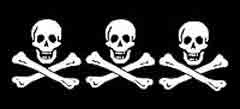
Terms applicable to sleeping for a greater understanding of the sleep process.
The elves derived their names from the Snap! Crackle! Pop! "sounds" that came from the Rice Krispies cereal in a bowl when milk was poured on it.
Ms. McLaurin was invited as part of a Black History Month celebration. “I thought I would never live to get into the White House and I tell you I am so happy to have a black president,” she said to the smiling Barack Obama and the first lady, Michelle Obama.
Click on this link: to see the video posted by the White House as Virginia McLaurin opens her arms wide and greets Obama with an excited "Hi!".
My focus these days is to collect English words that are derived from Latin and Greek sources (and their definitions). This self-imposed task is being done to provide the cross-reference area with as many Latin-Greek-English words as possible in the time that I am granted for the project.
Recently, a new book about the making of the Oxford English Dictionary, titled The Professor and the Madman — A Tale of Murder, Insanity, and the Making of the Oxford English Dictionary by Simon Winchester caught my attention. I bought the book and the audio because of my interest in lexicography.
Also, not long ago, I received an e-mail from an American, who had recently returned to California from England, in which he asked if I could explain why the British spell their words with “our”; such as, colour and why Americans spell it (and others) with “or”; such as with color, favor, etc.
As a result of my focus and because of the “our” and “or” question, I will be spending time in this newsletter presenting some information about dictionaries; also known as lexicons.
The earliest dictionaries were very limited in scope
- The earliest dictionary makers apparently were monks, men who lived in religious brotherhoods.
- During the seventh century, before the printing press was invented, these monks worked in church libraries making notes in the margins of their hand-lettered books.
- In those days, all books were written in Latin which was the language used in the Roman Catholic Church and in universities.
- The common people — farmers, shopkeepers, tradesmen, children — had no books of their own. In fact, it is very unlikely that they could even read because education was limited to very few people.
- Why did monks mark up the pages of their hand-made books? It seems the better educated monks who wrote the books wanted to make sure other monks who read the books would know what certain words meant.
- The notes came to be called glosses, from which we get our word glossasry — a list of words with definitions.
- For a thousand years, these glosses stayed in the books in church libraries. No one did anything with them.
- The term “dictionary” in one of its Latin forms (dictionarius, a collection of words) was used c. 1225 by an English scholar, John Garland, as the title for a manuscript of Latin words to be learned by memory.
- The words were not arranged in alphabetical order but in groups according to subject.
- This Dictionarius, was used only for the teacher’s classroom work in teaching Latin, and it contained no English except for a few interlined glosses (translations of single words).
- In the seventeenth century, some monks got the idea of making lists of those Latin glosses and translating them into English. The first dictionary, or glossary, was actually a list of Latin-English glosses. Monks in other countries also compiled Latin-French, Latin-Italian, and Latin-Spanish glossaries.
- Later in 1604, Robert Cawdrey, an English schoolmaster, published a dictionary, titled A Table Alphabeticall conteyning and teaching the true writing and understanding of hard usual English Wordes …with the interpretation thereof by plaine English words, gathered for the benefit & helpe of Ladies, Gentlewomen, or any other unskilfull persons.
- Although his dictionary included only difficult words, there is one principle of dictionary making that Cawdrey is remembered for today: he listed words in alphabetical order.
- Cawdrey, perhaps recalling the complicated groupings of words in some earlier dictionaries, stressed the importance of the word “alphabeticall” in his title.
- Apparently some “unskilfull persons” in his day (as in ours) had not taken the trouble to learn their ABC’s; so, he said, “Thou must learne the Alphabet, to wit, the order of the Letters as they stand.”
Samuel Johnson and A Dictionary of the English Language
- In 1747, after Lord Philip Chesterfield had negotiated with Samuel Johnson to write a new dictionary that could be used by all of the people, Johnson started the project.
- So confident was Johnson of his literary powers that he offered to write the dictionary in three years. Friends warned him that such a short time wouldn’t be enough. It had taken forty French scholars forty years to write a French dictionary. Shouldn’t he reconsider? “Nonsense,” Johson replied in effect. “Any Englishman is the equal of forty Frenchmen. Three years! That’s all it will take.”
- In 1755, Johnson finished A Dictionary of the English Language— eight years of “sluggishly treading the track of the alphabet,” he told friends, not three — and he wasn’t at all satisfied with the work he produced; but during those years, he had learned a great deal about words and how they make up language.
- In his Preface, Johnson started by writing: “It is the fate of those who toil at the lower employments of life, to be rather driven by the fear of evil, than attracted by the prospect of good; to be exposed to censure, without hope of praise; to be disgraced by miscarriage, or punished for neglect, where success would have been without applause, and diligence without reward.”
- “Among these unhappy mortals is the writer of dictionaries; whom mankind have considered, not as the pupil, but the slave of science, the pioneer of literature, doomed only to remove rubbish and clear obstructions from the paths of Learning and Genius, who presses forward to conquest and glory, without bestowing a smile on the humble drudge that facilitates their progress.”
- “Every other authour may aspire to praise; the lexicographer can only hope to escape reproach, and even this negative recompense has been yet granted to very few.”
- “Later in his Preface, he wrote: “Of the event of this work, for which, having laboured it with so much application, I cannot but have some degree of parental fondness, it is natural to form conjectures.”
- “Those who have been persuaded to think well of my design, require that it should fix our language, and put a stop to those alterations which time and chance have hitherto been suffered to make in it without opposition. With this consequence I will confess that I flattered myself for a while; but now begin to fear that I have indulged expectation which neither reason or experience can justify.”
- “When we see men grow old and die at a certain time one after another, from century to century, we laugh at the elixir that promises to prolong life to a thousand years; and with equal justice may the lexicographer be derided, who being able to produce no example of a nation that has preserved their words and phrases from mutability, shall imagine that his dictionary can embalm his language, and secure it from corruption and decay, that it is in his power to change sublunary* nature, or clear the world at once from folly, vanity, and affectation.” [*sublunary: of this world, earthly].
- After a lengthy explanation of how it is impossible to prevent changes in a language, especially when “As by the cultivation of various sciences, a language is amplified, it will be more furnished with words deflected from their original sense ….”; he goes on to say, “If the changes that we fear be thus irresistible, what remains but to acquiesce with silence, as in the other insurmountable distresses of humanity?”
- “It remains that we retard what we cannot repel, that we palliate* what we cannot cure. Life may be lengthened by care, though death cannot be ultimately defeated: tongues, like governments, have a natural tendency to degeneration; we have long preserved our constitution, let us make some struggles for our language.” [*palliate, to make less intense or severe; to mitigate].
- Johnson’s work was a landmark in the history of dictionary making. It was the first time anyone had put down on paper the words that actually made up the English language, and it set basic guides for the craft of dictionary making. Lexicographers for the next two centuries would follow many of the principles Johnson had established.
Early American dictionary makers
- Near the end of the 18th century, more than 20% of the world’s English-speaking people were living in the United States.
- Their policy of universal education indicated a need for an English dictionary designed for use in primary schools.
- In 1798, a Connecticut schoolmaster, Samuel Johnson, Jr., produced in New Haven, Conneticut, a little book titled A School Dictionary.
- Also in 1800, The Columbian Dictionary, by Caleb Alexander of Massachusetts, had about 32,000 entries in which American usage was recognized by a few words (cent, dime, dollar, elector, congress, Congressional, lengthy, minute-man, Presidential, Yanky), and honor, favor, color, and troop were spelled as such.
- The Columbian Dictionary also included some alternatives such as: calendar-kalendar, chequer-checker, screen-skreen, sponge-spunge.
- Alexander included simple words, providing a vocabulary that could reasonably be called “complete.”
- Was this where Noah Webster got his ideas for respelling the “our” words (colour, favour) to “or” (color, favor)?
Noah Webster, the “father” of American dictionaries
- One American who objected to the “personal style” of Samuel Johnson’s dictionary was a “sober, pious” New England schoolmaster named Noah Webster. “Johnson was always depressed by poverty,” he said tartly. “He was naturally indolent and seldom wrote until he was urged by want. Hence … he was compelled to prepare his manuscripts in haste.”
- In his view, dictionary making allowed no compromise, permitted no weakness. Webster set a standard for dictionary making that continues to this day.
- He attended Yale College and, five years after graduation, in 1783, he published his Blue-Back Speller, America’s first speller, grammar, and reader.
- This book sold an amazing million copies a year at a time when the entire populatiion of the United States was only 23 million. It stayed in print over a century (under the titles The American Spelling Book and later The Elementary Spelling Book) and sold a total of 70 million copies.
- Apparently, the money the book earned made it possible for Webster to spend his tlme doing what he really wanted; that is, writing dictionaries. To prepare himself for the task, he set about studying languages and in time learned twenty-six, including Anglo-Saxon and Sanskrit.
- The basic reason Americans needed a dictionary of their own, Webster believed, was that American English was different from the English of Johnson’s day. Settlers in America had spoken English for two centuries and had invented their own words to describe conditions in this new land.
- In 1806, Webster published A Compendious Dictionary of the English Language. By compendious, he meant “concise, brief, a summary.” His dictionary is important in the story of dictionaries because in the long history of lexicography, it showed for the first time how Americans spoke English.
- Of the 37,000 words in Webster’s dictionary, about 5,000 were native to America and never before had appeared in any British-English dictionary. Squash, skunk, raccoon, hickory, caucus, presidency, congressional, bullfrog, and applesauce are a few examples.
- Like Johnson, Webster searched for words in books, but he also tried something new — and established a principle of dictioinary making that has been followed ever since. He began recording words as he heard people use them. In doing so, he followed Johnson’s theory that spoken words make up a language.
- Webster had a few ideas about fixing the spelling of some words. The way many words were spelled, he noted, had no relation to the way they were pronounced.
- This offended Webster’s neat and orderly way of doing things. As he went about writing the Compendious, he changed the spelling of many words to match their sounds. He dropped the silent “u” in the English spelling of honour and favour and wrote honor and favor, and the final “k” in musick, logick, and publick and used instead music, logic, and public. He also dropped the second “l” in traveller, labelled, and farewell and transposed the last two letters in English words like centre and theatre.
- Webster also tried to simplify the spelling of other words by dropping silent letters: “e” from imagine, “e” from definite, “b” from thumb, “a” from feather, and “a” from head. For these spellings, he substituted imagin, definit, thum, fether, and hed. Most people were not ready for these new versions and so such spellings never became acceptable.
- For some unexplainable reasons, Americans went along, over two hundred years ago, with favor, honor, public, logic, music, traveler, and labeled. They also agreed to switch the “re” to “er” in center and theater; but they strongly objected to most of the other changes Webster suggested.
- We still write thumb with a “b”, head and feather with an “a”, farewell with a double “l”, and imagine and definite with a final “e” even though these letters serve no purpose; except perhaps to show the unpredictable way language develops and that people, not grammarians or dictionary makers, primarily determine how we spell the words we read and write.
- Samuel Johnson’s suggestion that dictionary makers, “retard what we cannot repel” ; that is, slow the process of drastic changes in English since they cannot be stopped or rejected; may actually be working. Dictionaries are often the “authority” that we consult when people have doubts about the “correct” meanings and applications of words and so may indeed provide stability in the language.
2. How does anyone learn the art of converting defeat into stepping stones to opportunity?
3. All achievements have their beginnings in ideas because thoughts are things!
- Ideas can be powerful things when they are mixed with a definite purpose, persistence, and a burning desire for their translations into definite objectives.
- One sound idea is all that a person needs to achieve success.
- Achievements begin with a state of mind and with a definite purpose.
- Success comes to those who become success conscious. Failure comes to those who indifferently allow themselves to become failure conscious.
- One of the principles of success is desire: knowing what one wants.
- DESIRE is the starting point of ALL achievement!
- Choosing a definite goal places all the energy, all the will power, all the effort, everything, back to that goal.
- Desiring success with a state of mind that becomes an obsession, then planning definite ways and means to acquire success, and backing those plans with persistence which does not recognize failure, will bring success.
- There is one quality which a person must possess to win, and that is definiteness of purpose, the knowledge of what one wants, and a burning desire to possess it.
- A burning desire to be and to do is the starting point from which the dreamer must take off.
- Dreams are not born of indifference, laziness, or lack of ambition.
- Remember that all who succeed in life get off to a bad start, and pass through many heartbreaking struggles before they "arrive".
- No one is ready for any thing until that person believes that it can be acquired. The state of mind must be belief, not mere hope or wish.
Whatever the mind of man can conceive and believe, it can achieve.
If the thing you wish to do is right, and you believe in it, go ahead and do it! Put your dream across, and never mind what "they" say if you meet with temporary defeat, for "they", perhaps, do not know that every failure brings with it the seed of an equivalent success.
Yes, you can! (page 1)
2. Both poverty and riches are the offspring of thought.
Faith is the visualization of, and belief in attainment of desire
Faith is the head chemist of the mind and when faith is blended with thought, the subconscious mind instantly picks up the vibration, translates it into its spiritual equivalent, and transmits it to Infinite Intelligence, as in the case of prayer.
- Faith is a state of mind which may be induced, or created, by affirmation or repeated instructions to the subconscious mind, through the principle of autosuggestion.
- Repetition of affirmation of orders to your subconscious mind is the only known method of voluntary development of the emotion of faith.
- Your belief, or faith, is the element which determines the action of your subconscious mind.
- It is essential that people encourage the positive emotions as dominating forces of their minds, and to discourage and to eliminate negative emotions.
- It is a well-known fact that people come, finally, to believe whatever they repeat to them selves, whether the statements are true or false. People are what they are because of the dominating thoughts which they permit to occupy their minds.
- Thoughts which are mixed with any of the feelings of emotions constitute a "magnetic" force which attracts other similar or related thoughts.
The law of autosuggestion, through which anyone may rise to altitudes of achievement which stagger the imagination, is well described in the following composition:
If you think you dare not, you don't.
If you like to win, but you think you can't,
It is almost certain you won't.
If you think you'll lose, you're lost
For out of the world we find,
Success begins with a person's will;
It's all in the state of mind.
If you think you are outclassed, you are,
You've got to think high to rise,
You've got to be sure of yourself before
You can ever win a prize.
Life's battles don't always go
To the strongest or fastest woman or man,
But sooner or later, those who win
Are those WHO THINK THEY CAN!
Yes, you can! (page 1)
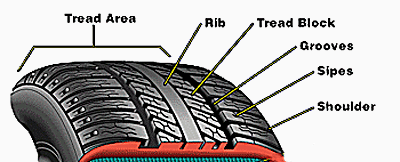
- Blocks in the middle of the tire form the tire's gripping surface or traction.
- Ribs, which are next to the blocks, also form the tire's gripping features consisting of straight-lined rows of blocks that create a circumferential contact "band".
- Sipes make the tire bend more to improve handling and consist of slit-like grooves in the tread blocks that allow the blocks to move with added flexibility, and increases traction by creating an additional biting edge.
Sipes are especially helpful on ice, light snow, and loose dirt.
- Shoulders add grip when the car is cornering.
They provide continuous contact with the road while maneuvering as they wrap slightly over the inner and outer sidewall of a tire.
- Grooves are the drains which the tire squeezes water along as it presses the road and pushes it out to the side.
A low void ratio groove means more rubber is in contact with the road while a high void ratio increases the ability to drain water.
Whether a tire has a high or low void ratio depends on the tire's intended use.
- Dimples are little depressions that are part of the shoulder.
Such indentations in the tread improve cooling.
- Belt, the reinforcement layer extending around the outer circumference of the carcass under the tread.
It acts like an iron hoop in improving the stiffness of the tread area. In the case of truck and bus tires, the belt is more heavily reinforced compared to passenger car tires.
- Tread is that part of a tire which contacts the road surface.
The tread consists of a layer of rubber, compounded to suit the application purpose of the tire, and the thickness serves to protect the belt and carcass.
The tread pattern functions to improve water drainage, providing traction, braking, and cornering characteristics; as well as, a longer tread life.
Different parts of tire tread work as a team to keep the car on the road.
A few articles about recent trends in U.S. education caught my attention in the last few weeks that represent a SAD turn for our modern educational system. I am including a few snippets for you to consider.
- Among other things, he said, "At least I know I inflate my grades. Younger colleagues don't remember when B was an honor grade, D's and F's hardly the rarities they are now. Today, if students complete assignments, however shoddily, the instructor finds a way to stick a C on their transcripts."
- At the end of the article, Mr. Zorn concluded: "Academic under preparation is the American norm today. High schools and colleges expect less from students, and students respond accordingly. On tests administered internationally, U.S. students score low but assess their own abilities high; higher than any other country's kids."
- "In colleges across the United States today, straight-A high school graduates need remedial work in courses less demanding than those I took in Class III at Latin School in 1920."
"In American Schools Today, Everyone Is in the Top Half" by Jeff Zorn from Santa Clara University near San Francisco, California, as seen in the June 2, 2000, issue of the International Herald Tribune gives one example of educational deception in the U.S.
Educators Attempt to Find "Educational Success" by Cheating
"To Raise Test Scores, Schools Pressure Teachers to Cheat" by Jay Mathews and Amy Argetsinger as seen in the June 3-4, 2000, issue of the International Herald Tribune.
"Barbara McCarroll was already puzzled and a little upset about her fifth-grade students" low test scores when her boss at Eastgate Elementary in Columbus, Ohio, approached her. How was it, the principal snapped, that the same children had done so much better on standardized exams the year before?"
"After eight years of teaching, Ms. McCarroll knew it paid to be frank with children, so she asked them. She was not prepared for the answer: 'Well, Ms. McCarroll, that's because they gave us the answers and you didn't.' "
"At a time when superintendents are under pressure to increase test scores and hold principals and teachers accountable for student success, talk of cheating dominates the conversation in education circles."
"In New York City, cheating was found to be so rampant that it led to the resignation of the schools chief. A special investigator found that one principal had students fill out their answers on scrap paper. Only when they came up with the right answers did she give them the official answer sheet to fill out."
And the concluding paragraph: "At another New York school, a seventh-grade teacher allegedly left answers near the pencil sharpener, then urged her students to sharpen their pencils."
Some Schools Change the Meaning of "Top 10%"
In an article titled, "College Entry in U.S. Inspires New Calculation Some High Schools Cram Kids Into Top 10%" by Daniel Golden in the May 16, 2000, issue of the Wall Street Journal Europe, shows another form of educational deception.
Prominently displayed in Shirley Faske's office at Westlake High School is a notice advising students that they must rank "in the top 10%" of their graduating class to gain automatic admission to a Texas public university.
The writer continues, "But last year, suburban Westlake crammed 63 of its 491 seniors, or 12.8%, into the top 10%, violating the laws of mathematics - and of the Lone Star State."
"Such finagling threatens to undermine the movement in the U.S. to link college admission to high-school class rank."
Is this more of Dumbing Down our Kids (1995, St. Martin's Press) as presented in by Charles J. Sykes in his book of the same title? The subtitle is, "Why American Children Feel Good about Themselves but Can't Read, Write, or Add".
A few of his points include:
"The dumbing down of America's students is a direct result of the dumbing down of the curriculum and the standards of American schools —the legacy of a decades-long flight from learning."
"American students are unable to effectively compete with the rest of the industrialized world, because our schools teach less, expect less, and settle for less than do those of other countries."
"Even as evidence mounts that American students are lacking in basic academic skills such as writing, reading [including vocabulary skills], and mathematics, schools are increasingly emphasizing so-called 'affective' learning that deals with the feelings, attitudes, and beliefs of students, rather than addressing what they know or can do."
"As both standards and achievement have fallen, American schools have inflated grades, adjusted or fudged test scores, or dumbed down the tests altogether to provide the illusion of success. When those measure have been insufficient, they have changed their definitions of 'success'. "
"In the name of 'equity,' 'fairness,' 'inclusiveness,' and 'self-esteem,' standards of excellence are being eroded throughout American education. Educational levelers have become increasingly aggressive in their attacks on ability grouping, programs for the gifted and talented, and distinctions, such as graduation honors, for the best and brightest students."
Do the contemporary articles produced above show any relationship to Charles Sykes' book?
So what does the foregoing have to do with this newsletter and the Latin-Greek Cross References?
The point that I would like to make is that if you were deprived of a proper education; especially, in the rich contributions of Latin and Greek elements in English, then you may take advantage of the sources provided in the Latin-Greek Cross References located via the links at this URL: Word Info.
If you did learn Latin (and Greek) in school, then you will have an even greater appreciation of the family arrangements of the English words that are derived from the many Latin and Greek sources.
Examples of the (verbs) and what they are indicating:
abdicate [first person (s) and (pl), second person (s) and (pl), plus third person (pl)], abdicates [third person (s)] (see the examples shown in the "Present Tenses" below);
abdicated [past tense, (s) and (pl)];
abdicating [present progressive, present perfect, past perfect, future perfect] (verbs)
The full range of applicable conjugation formats:
- I abdicate (singular); We abdicate (plural)
- You abdicate (singular); You abdicate (plural)
- He, She, It abdicates (singular); They abdicate (plural)
- I abdicated (singular); We abdicated (plural)
- You abdicated (singular); You abdicated (plural)
- He, She, It abdicated (singular); They abdicated (plural)
- I will abdicate (singular); We will abdicate (plural)
- You will abdicate (singular); You will abdicate (plural)
- He, She, It will abdicate (singular); They will abdicate (plural)
- I am abdicating (singular); We are abdicating (plural)
- You are abdicating (singular); You are abdicating (plural)
- He, She, It is abdicating (singular); They are abdicating (plural)
- I have been abdicating (singular); We have been abdicating (plural)
- You have been abdicating (singular); You have been abdicating (plural)
- He, She, It has been abdicating (singular); They have been abdicating (plural)
- I had been abdicating (singular); We had been abdicating (plural)
- You had been abdicating (singular); You had been abdicating (plural)
- He, She, It had been abdicating (singular); They had been abdicating (plural)
- I will have been abdicating (singular); We will have been abdicating (plural)
- You will have been abdicating (singular); You will have been abdicating (plural)
- He, She, It will have been abdicating (singular); They will have been abdicating (plural)
Present Tenses
Past Tenses
Future Tenses
Present Progressive Tenses
Present Perfect Tenses
Past Perfect Tenses
Future Perfect Tenses
The science of measurement standards and methods is known as metrology.
Today the chief systems are the English units of measurement and the metric system
The United States is one of the few countries still using the English system; all other major nations have either converted to the metric system or committed themselves to conversion.
The English system is much older and is said to be less practical than the metric system, and in the United States there has been considerable discussion in favor of adopting the metric system as the principal system; however, attempts to legislate such a change in the U.S. Congress have failed.
The basic units of the English system, the yard of length and the pound of mass, are now defined in terms of the metric standards, the meter of length and the kilogram of mass.