You searched for: “abominates
abominate (verb), abominates; abominated; abominating
1. To dislike, to find repugnant, and to intensely disapprove of someone or something: "Georgia abominates the smell of strong perfume in a small room."

"Allen has always abominated loud music and could not be tempted to attend a rock concert in the local park."

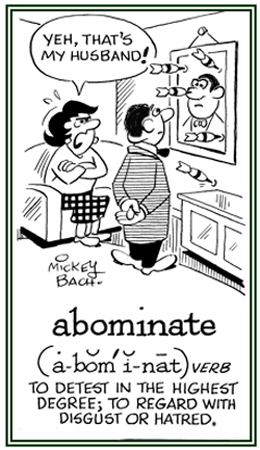
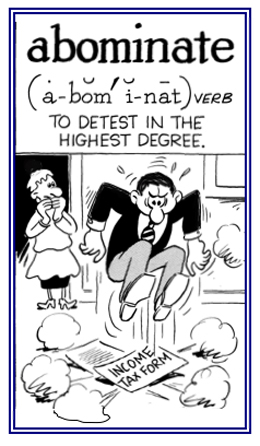
2. To detest thoroughly; to abhor: "There is nothing that abominates Nellie more than the thought of eating raw meat."

"The crowd will be abominating the imposition of an early curfew by the local authorities."


Word History

For the ancient Romans, an omen was a sign from the gods or a promise of good or a warning of evil.

Naturally, they turned away in fear from an evil omen. To express this aversion, they combined ab, "away" plus omen, "a foreboding", into the verb abominari, meaning "to deprecate as ominous", "to abhor"; with a past participle abominatus, the source of English abominate. The word has largely lost its original connotation of dread and has come to mean "to loathe", "to despise".

—Compiled from information located in the
Picturesque Word Origins; G. & C. Merriam Company;
Springfield, Massachusetts, U.S.A; 1933; page 5.
This entry is located in the following units: a-, ab-, abs- (page 8) omen + (page 1)
Word Entries at Get Words: “abominates
abominate (uh BOM uh nayt") (verb), abominates; abominated; abominating
1. To detest thoroughly; to abhor.

"A politician who is revered by his supporters is also abominated by his enemies."

2. To shrink from an evil omen.

To the ancient Romans an omen was a sign from the gods; a promise of good or a warning of evil.

Naturally, they turned away in fear from and evil omen. To express this aversion, they combined ab, "away" and omen, "a foreboding", into the verb abominari, meaning "to deprecate as ominous, to abhor", with a past participle abominatus, the source of English abominate.

The word has largely lost its original connotation of dread and has come to mean "to loathe, to despise."

—Based on information from Picturesque Word Origins;
G. & C. Merriam Company; Springfield, Massachusetts; 1933; page 5.
This entry is located in the following unit: English Words in Action, Group A + (page 3)