
You searched for:
“abhorring”
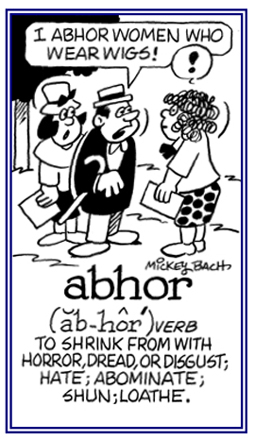
abhor (uhb HOHR) (verb), abhors; abhorred; abhorring
1. To shrink away from in fear, disgust, or hatred; to detest, to hate, to despise: Toby, the cat, abhors the sounds of fog horns because they hurt his ears.
© ALL rights are reserved.
Go to this Word A Day Revisited Index
Jeremy abhorred putting off the completion of the project.
2. To disapprove of or to reject something very strongly; to recoil from, or to shudder at: Kay's neighbor has always abhorred loud music because it causes him to have severe headaches.The family abhors the very thought of having to move again.
Ariana abhorred the mosquitoes that were breeding in the rain barrel by her garage.
3. To loathe or to detest: Anyone devoted to democratic ideals must abhor the idea of making distinctions on the basis of religion or race.Dr. Emmett abhors people who are habitually late for medical appointments.
4. Etymology: from Latin abhorrere, "to shrink back from, to have an aversion for, to shudder at"; from ab-. "away" + horrere, "to tremble at, to shudder"; literally, "to bristle, to be shaggy".The Romans used the stronger term of abhor instead of milder forms of detestation (strong dislike or hatred), just as people do now in modern times.
Go to this Word A Day Revisited Index
so you can see more of Mickey Bach's cartoons.
Word Entries at Get Words:
“abhorring”
To disapprove of or to reject something very strongly; to recoil from; to shun or to loathe. (1)
This entry is located in the following unit:
Word a Day Revisited Index of Cartoons Illustrating the Meanings of Words
(page 1)